Everyday care 5 min read
Simple enrichment ideas for happier dogs and cats
Make room for sniffing, searching, scratching, and play with practical activities suited to your individual dog or cat.

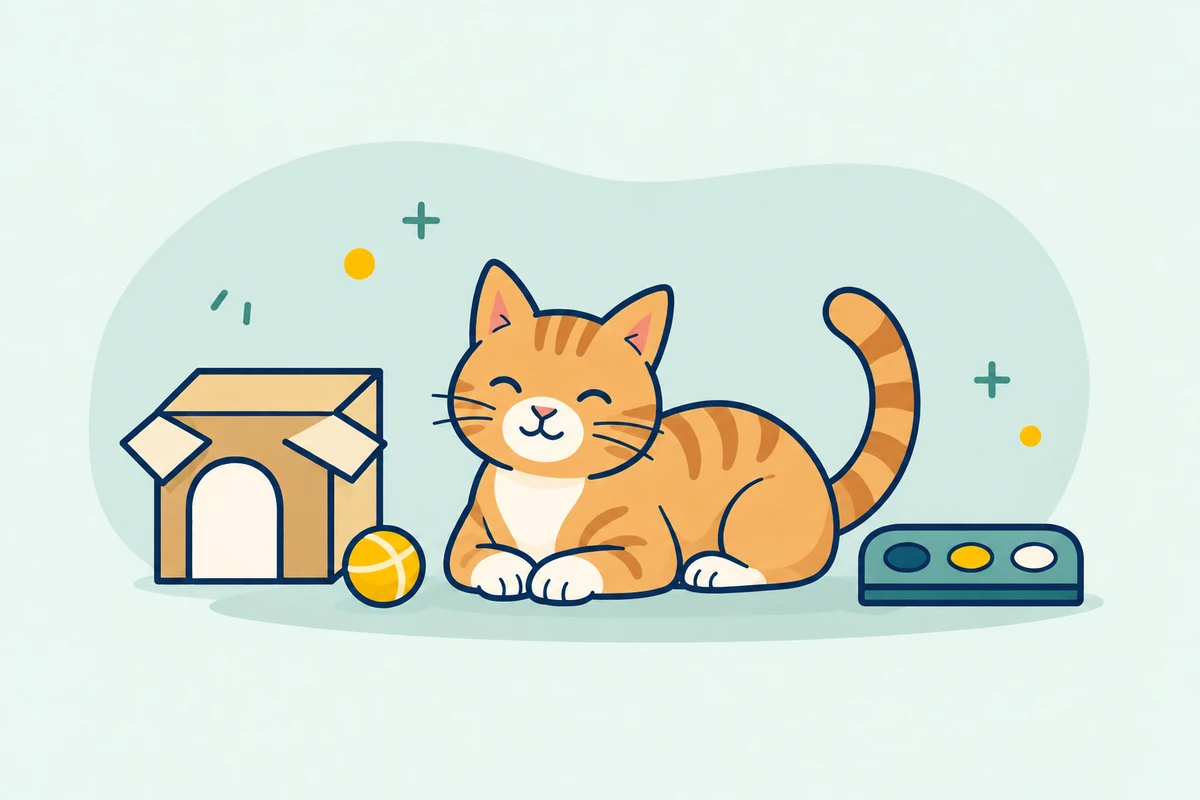
A good enrichment activity gives a pet something enjoyable to do with their senses, body, or mind. It might be a dog following an interesting smell or a cat watching a toy disappear around the edge of a box. The value comes from the animal’s experience, not the price of the equipment.
Start with one small idea and see how your pet responds. These suggestions are a menu to adapt, rather than a daily scorecard or a challenge to make your pet busier.
The short version
Key takeaways
- Choose activities around your pet’s interests, abilities, and health.
- Keep food games within the pet’s usual appropriate food allowance.
- Offer short, achievable play and learning opportunities.
- Safe places to hide, rest, and scratch are part of a cat-friendly home.
Let your pet tell you what is interesting
Dogs Trust recommends watching whether a dog seems engaged, confused, or frustrated during enrichment. Ask whether the activity is enjoyable today, and make a puzzle easier if needed.
Choose safe materials and suitable sizes. Supervise new activities, especially homemade food games, and remove items that are being torn apart or swallowed. Adapt the setup to the individual animal’s abilities.
Further reading: Dogs Trust: Enrichment activities for dogs (opens in a new tab)
For dogs, make room for their nose
A walk can include time to investigate safe smells rather than covering distance continuously. At home, an easy search for a little of the dog’s usual food offers another way to explore. The American Kennel Club describes scent games that can work even in a small indoor space.
Keep the first game simple enough to succeed. If food is involved, account for it in the day’s meals and follow any dietary restrictions. You can keep a brief note of what your dog chose to do; that makes the next activity easier to plan.
Further reading: Dogs Trust: Enrichment activities for dogs (opens in a new tab); American Kennel Club: Indoor scent games for dogs (opens in a new tab)
For cats, create a game they can catch
Cats Protection recommends play that allows stalking, chasing, pouncing, and batting. Move a wand toy like something the cat can follow, and let them catch it during the game. Use toys instead of fingers or toes so play stays directed away from people’s skin.
A few short sessions can suit a cat better than one long performance. Rotate available toys and check for wear. Put away string or wand toys after supervised play, along with anything the cat could become tangled in or chew into pieces.
Further reading: Cats Protection: Cats and play (opens in a new tab)
Improve the space, not just the toy basket
For a cat, a secure hiding spot, accessible elevated resting place, and well-positioned scratching surface can make everyday surroundings more useful. Cats Protection recommends keeping toileting areas quiet and separate from feeding areas, and offering places to retreat from household activity.
Look at the routes through your home. Can the cat reach a quiet resting place without navigating visitors? Is the scratching surface near a place they already like to stretch? A small adjustment may be more useful than another unfamiliar toy.
| What your cat needs | A practical starting point |
|---|---|
| Somewhere to hide | A stable, accessible box in a quiet spot. |
| A comfortable lookout | A secure raised resting place they can reach comfortably. |
| A place to scratch | A suitable scratching surface near a favorite resting area. |
| Choice during busy times | An undisturbed retreat away from visitors and other pets. |
Improve the space, not just the toy basket: at a glance
- What your cat needs
Somewhere to hide
- A practical starting point
- A stable, accessible box in a quiet spot.
- What your cat needs
A comfortable lookout
- A practical starting point
- A secure raised resting place they can reach comfortably.
- What your cat needs
A place to scratch
- A practical starting point
- A suitable scratching surface near a favorite resting area.
- What your cat needs
Choice during busy times
- A practical starting point
- An undisturbed retreat away from visitors and other pets.
Further reading: Cats Protection: How to create a cat-friendly home (opens in a new tab)
Include learning that feels good
The American Veterinary Society of Animal Behavior recommends reward-based methods for dog training. Choose one useful behavior and make the task easy to understand. For example, reward a dog for returning to a familiar resting mat, then finish while the interaction is still comfortable.
Rewards can include something the dog values, such as an appropriate treat or a favorite activity. Avoid techniques intended to frighten or physically punish them. If you are struggling, a qualified professional who uses reward-based methods can help you make the learning steps clearer.
Enrichment is one part of care. It cannot explain every change in behavior, and a pet who suddenly loses interest in normal activities may need veterinary advice rather than a more difficult puzzle.
Further reading: AVSAB: Position statement on humane dog training (opens in a new tab); AVSAB: Using natural rewards in training (opens in a new tab); Cats Protection: Cats and play (opens in a new tab)
A few more things to know
Frequently asked questions
Do I need expensive puzzle toys?
No. A safe toy search, time to sniff, or an appropriate box can offer something interesting. Choose the activity for the pet and supervise anything new.
How long should I play with my cat?
Short games are useful; Cats Protection notes that even one or two minutes can be worthwhile. Offer play regularly and adjust to the individual cat rather than insisting on a fixed session length.
What if my dog cannot solve a food puzzle?
Make it easier or offer a different activity. Watch for frustration, keep the food accessible enough for success, and include any food used within their appropriate daily allowance.
Can training count as enrichment?
Yes, when it provides an enjoyable, achievable learning experience. Use rewards, keep the steps clear, and allow breaks. Training should not depend on fear, force, or discomfort.
Sources & further reading
Explore the guidance behind this article.
- Dogs Trust: Enrichment activities for dogs (opens in a new tab)
- Cats Protection: Cats and play (opens in a new tab)
- Cats Protection: How to create a cat-friendly home (opens in a new tab)
- AVSAB: Position statement on humane dog training (opens in a new tab)
- AVSAB: Using natural rewards in training (opens in a new tab)
- American Kennel Club: Indoor scent games for dogs (opens in a new tab)
Thoughtful reads for people who want animals to feel safe, comfortable, and loved. These guides share general information; your veterinarian can advise on your animal’s individual health needs.