Adoption & settling in 7 min read
Adopting an adult or senior pet: questions for a good match
Look beyond age when meeting an adult dog or cat. Prepare useful questions about daily routines, records, home access, ongoing care and the support you can offer.

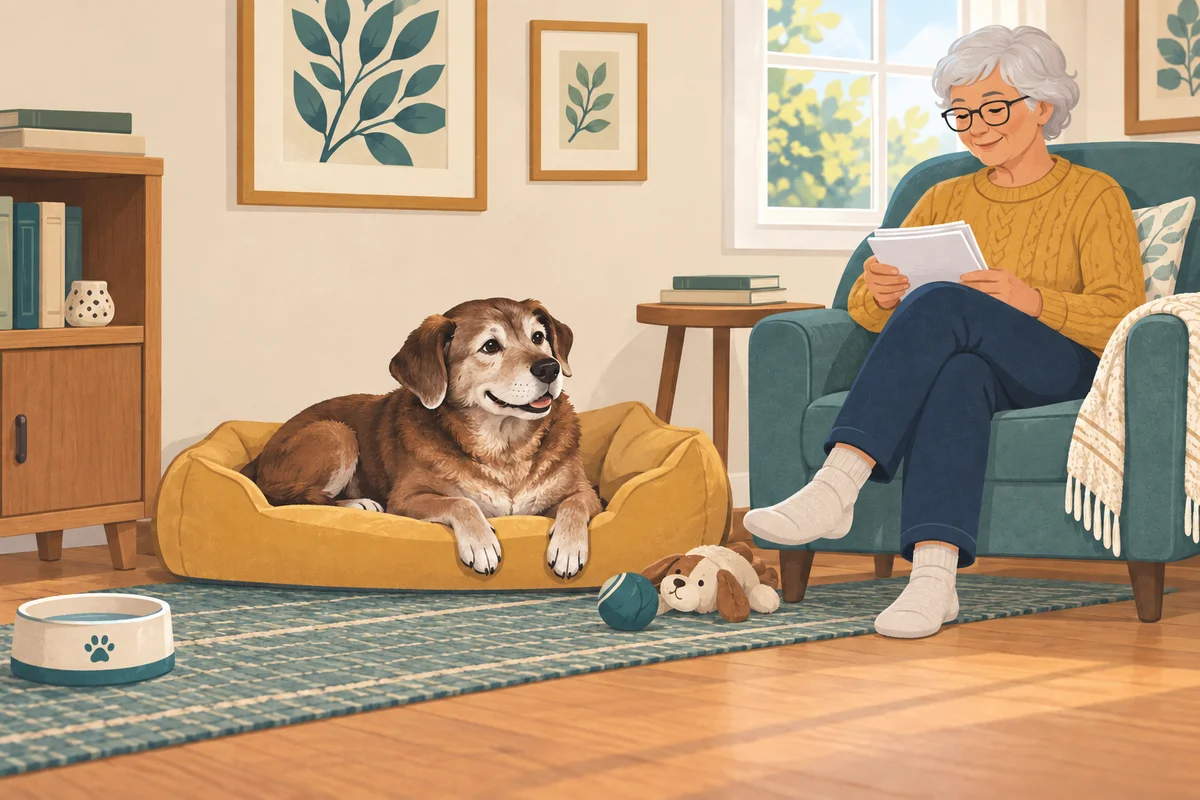
An adult cat who enjoys a quiet evening or an older dog who loves a gentle sniffing walk can bring a great deal to a home. Choosing one starts with getting to know that individual: what they enjoy, what daily care involves and where your household can meet their needs.
Age is useful context, but it cannot tell you everything about energy, health or compatibility. Use the conversations below to turn a promising meeting into a practical plan. The linked animal-welfare and veterinary sources were checked on September 27, 2026. This guide prepares questions for the adoption team and your veterinarian; it does not assess or treat an animal’s health.
The short version
Key takeaways
- Ask for examples from daily life, including where and when the behavior was observed.
- Review available care records and the practical demands of your home before committing.
- Make room for enjoyable activities, support and changing needs as well as routine care.
Start with the individual behind the age label
Adult and senior describe different stages of life. AAHA notes that there is no single senior-age cutoff covering every dog and cat. Ask whether the listed age is documented or estimated, then spend more of the conversation on the animal’s actual routine than on the number.
An adult cat’s established preferences can help with matching, but cats still differ in sociability and activity. For a dog, ask what a comfortable walk, an ordinary afternoon and time alone currently look like. A label such as calm becomes more useful when someone can describe it.
Keep observations in context. Dogs Trust explains that behavior in a rehoming center may differ from behavior at home. Record whether an answer came from a previous home, a foster caregiver or the current shelter; leave unknowns visible.
Further reading: AAHA: Defining the Senior Patient (opens in a new tab); Cats Protection: Choosing the Right Cat for You (opens in a new tab); Dogs Trust: Questions to Ask When Adopting a Dog (opens in a new tab)
Ask for the current care picture in writing
Ask which veterinary records can be shared and what follow-up has already been recommended. For a pet receiving ongoing care, request the current written instructions and a clear explanation of who will answer questions during the handover. A reassuring description should sit alongside the available records.
AAHA’s senior assessment guidance includes daily habits and everything a pet is receiving, including prescribed products and supplements. Bring that information to your veterinarian and agree the next appointment and review plan. Avoid starting a new product or changing an existing plan simply because a label says senior.
| Discuss with the adoption team | Useful detail to take away |
|---|---|
| Current care and recent appointments | Available records, instructions and any pending follow-up |
| Eating, drinking, toileting and movement | The present routine and changes the team has noticed |
| Diet, medicines and supplements | An accurate current list to review with your veterinarian |
Ask for the current care picture in writing: at a glance
- Discuss with the adoption team
Current care and recent appointments
- Useful detail to take away
- Available records, instructions and any pending follow-up
- Discuss with the adoption team
Eating, drinking, toileting and movement
- Useful detail to take away
- The present routine and changes the team has noticed
- Discuss with the adoption team
Diet, medicines and supplements
- Useful detail to take away
- An accurate current list to review with your veterinarian
Further reading: AAHA: Evaluating the Healthy Senior Pet (opens in a new tab); AAHA: Supporting Your Senior Pet—Veterinary Care Recommendations (opens in a new tab)
Look at your home from this pet’s level
Walk the route between the sleeping space, food, water and the place used for toileting. Note stairs, slippery floors, narrow turns and the route into your vehicle. Describe these to the adoption team instead of assuming the animal can manage what your previous pet could.
AAHA describes home adjustments such as nonslip surfaces and appropriate access aids for older pets. Ask which changes suit this particular animal before buying equipment. A photograph or simple room sketch can make that discussion more concrete.
Include the household’s activity in the plan. Where can the pet rest when visitors arrive, and how will children and other animals be supervised? Ask the team about introductions and the space this pet needs. Age alone does not establish that an animal will enjoy busy company.
Further reading: AAHA: Aging With Grace—How to Support Your Senior Pet (opens in a new tab); Cats Protection: Choosing the Right Cat for You (opens in a new tab); Dogs Trust: Questions to Ask When Adopting a Dog (opens in a new tab)
Make the care plan workable on an ordinary weekday
Write down who would handle meals, walks or litter care, appointments and any care tasks already prescribed. Test that plan against a workday and a day when your usual helper is unavailable. This turns a vague promise to manage into a few decisions you can discuss before adoption.
Ask your veterinary practice for estimates based on the known care plan, and separate recurring expenses from uncertain future needs. There is no reliable flat cost that applies to every older pet. AAHA encourages open discussion of caregivers’ time, physical demands and financial limits so that plans remain realistic.
Identify a backup caregiver and agree how they can reach you and the veterinary practice. AAHA’s senior-care resources include emergency decision and payment arrangements for pet sitters. Keep the relevant instructions somewhere your chosen helper can actually find them.
Further reading: AAHA: Managing the Caregiver Burden (opens in a new tab); AAHA: Senior Care Kits (opens in a new tab)
Find out what makes this animal’s day better
Ask about favorite games, comfortable forms of attention and places the pet chooses to relax. Dogs Trust notes that older dogs can continue to enjoy learning and mental activity. The useful question is which activities suit this dog now, rather than whether an older animal should stop playing.
Plan activities around the pet’s condition and preferences, with veterinary advice where needed. Keep opportunities to opt out: an invitation to interact should not become a demand. A familiar toy, a gentle activity or quiet time together may be more useful than a large new shopping list.
After adoption, pay attention to changes in the animal’s usual participation. A new reluctance to move, interact or groom deserves a conversation with your veterinarian rather than an automatic explanation of old age.
Further reading: Dogs Trust: Caring for an Older Dog (opens in a new tab); AAHA: Aging With Grace—How to Support Your Senior Pet (opens in a new tab)
Finish the meeting with a short next-step list
Before deciding, sort your notes into what you know, what still needs an answer and what your household would need to change. For example, knowing the current walking routine is different from confirming that someone can provide it every weekday. Give each unanswered practical question a person to follow up with.
If you proceed, keep the care records, the organization’s support contact and your first veterinary appointment together. Ask how the adoption team handles questions after placement. A thoughtful match includes a route to support when new information appears.
- Confirm the animal’s present routine and the limits of the known history.
- Check that the home setup and daily responsibilities are workable.
- Agree who will provide remaining records and answer open questions.
- Arrange the next conversation with the adoption team or veterinary practice.
Further reading: Dogs Trust: Questions to Ask When Adopting a Dog (opens in a new tab); AAHA: Managing the Caregiver Burden (opens in a new tab); AAHA: Senior Care Kits (opens in a new tab)
A few more things to know
Frequently asked questions
Is every adult pet a senior pet?
No. Adult and senior describe different life stages, and senior status varies with species and, for dogs, size and breed. Ask how the organization arrived at the listed age and what that means for this animal’s current care.
Does an older pet automatically need less attention?
No. An older animal may have a quieter activity pattern while still needing companionship, enjoyable activities and regular care. Ask about this pet’s day and assess whether your household can support it.
What if some of the animal’s history is unknown?
Keep the gaps explicit and work with the records and observations available. Ask where observations were made and arrange veterinary follow-up. An incomplete history does not tell you that a particular problem exists or that future behavior is guaranteed.
Should I buy senior food or supplements before adoption?
Get the current feeding and care instructions first. Discuss any proposed change with the veterinarian who will care for the pet; an age label alone is not a personalized nutrition or treatment plan.
Can I still teach an older dog something new?
Yes. Older dogs can enjoy learning and mental activity. Choose comfortable activities suited to the individual, and ask the adoption team or veterinarian about any relevant limits.
Sources & further reading
Explore the guidance behind this article.
- AAHA: Defining the Senior Patient (opens in a new tab)
- Cats Protection: Choosing the Right Cat for You (opens in a new tab)
- Dogs Trust: Questions to Ask When Adopting a Dog (opens in a new tab)
- AAHA: Evaluating the Healthy Senior Pet (opens in a new tab)
- AAHA: Supporting Your Senior Pet—Veterinary Care Recommendations (opens in a new tab)
- AAHA: Aging With Grace—How to Support Your Senior Pet (opens in a new tab)
- AAHA: Managing the Caregiver Burden (opens in a new tab)
- AAHA: Senior Care Kits (opens in a new tab)
- Dogs Trust: Caring for an Older Dog (opens in a new tab)
Thoughtful reads for people who want animals to feel safe, comfortable, and loved. These guides share general information; your veterinarian can advise on your animal’s individual health needs.