Adoption & settling in 5 min read
Set up a quiet space for a new dog or cat
Plan a comfortable retreat before adoption day, with practical layouts for dogs and cats, safer access and thoughtful options for smaller homes.

Before deciding where the new bed looks nicest, imagine the room from your pet's level. Which routes stay busy? Where do doors swing open? Can an animal rest without someone reaching over them or moving them out of the way? A little planning can make the first space easier to use.
This guide focuses on that physical setup. You do not need a picture-perfect room or a shopping list full of matching accessories. You need a secure, usable place suited to this animal, plus a household that respects it. Discuss individual needs with the shelter or foster caregiver before collection.
The short version
Key takeaways
- Choose a usable retreat away from the busiest household routes.
- Place essentials so the animal can reach them comfortably.
- Dogs and cats need different arrangements; one layout does not fit both.
- Agree that a resting animal can remain undisturbed.
Choose the location before adding the accessories
Walk through the available space at an ordinary busy time, not only when the house is empty. Notice appliance noise, visitors' routes, direct access to outside doors and anything that would require you to keep moving the animal's bedding. Write down two possible locations and what each would need to work.
Dogs Trust notes that some dogs prefer a retreat near family. Cats Protection recommends a quiet starting room for a new cat. Ask the adoption team which arrangement suits your companion.
Further reading: Dogs Trust: Creating a safe space for your dog (opens in a new tab); Cats Protection: Bringing a Cat Home (opens in a new tab)
Arrange a dog's resting area around easy access
Provide a comfortable bed, room to stretch and nearby water. Keep construction stable and hazards out of reach. Dogs Trust suggests beds, nooks or open crates as possible retreats, with voluntary entry and exit within a secure space. Never use the retreat as punishment.
Before choosing an enclosure, ask the caregiver what the dog already uses. Write that answer on your room sketch so a shopping decision follows the animal's experience.
Further reading: Dogs Trust: Creating a safe space for your dog (opens in a new tab)
Give a cat separate places for different needs
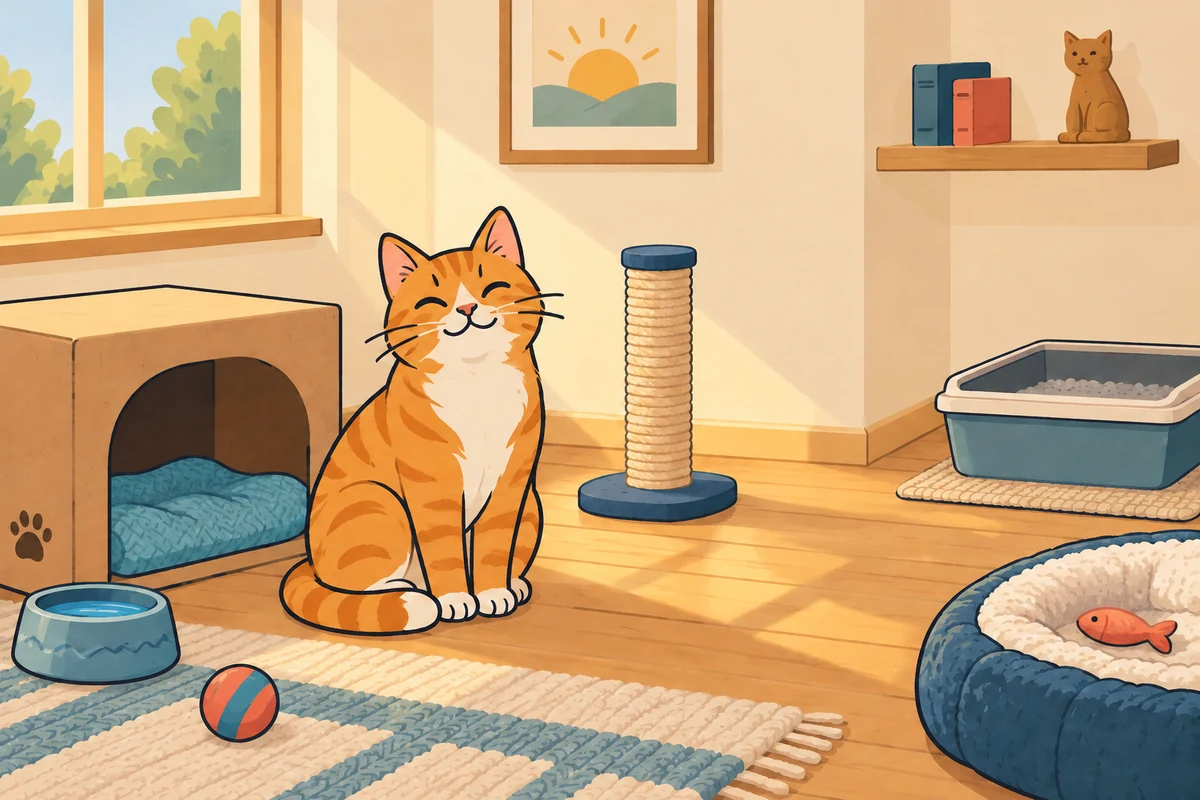
In the starting room, separate food and water, with litter away from both. Provide hiding and sleeping places, a scratching surface and a stable, accessible lookout. Cats Protection's arrival guide explains these essentials.
Check the location of each item as well as whether you own it. Cats Protection advises placing litter facilities away from busy routes and unsettling appliances. If the only empty corner is beside a washing machine, look for a quieter arrangement. Keep access to essentials clear rather than packing every available space with toys.
Further reading: Cats Protection: Bringing a Cat Home (opens in a new tab); Cats Protection: How to create a cat-friendly home (opens in a new tab)
Make the space work in a smaller home
A smaller home makes planning more important, but it does not make an expensive pet room the answer. Start with the space you actually have and sketch where resting, feeding, toileting and household traffic would go. Mark any places where you would need a secure separation from resident animals, then discuss that plan with the adoption team.
Use the walkthrough below to spot practical problems before arrival. These are planning prompts, not a minimum-size formula. If your layout cannot provide the separation or access this animal needs, ask about another arrangement or take more preparation time. A small travel carrier is not a substitute for a cat's living area.
| Look at | Check before arrival |
|---|---|
| Entry and exit | Can you manage doors without opening a route to outside? |
| Everyday traffic | Will people repeatedly pass through or move the resting area? |
| Hazards | Are medicines, cleaners, trailing cords and unsafe small items out of reach? |
| Furniture | Is the setup stable, with no makeshift stack that could fall? |
| Access | Can this animal comfortably reach water, rest and other essentials? |
Make the space work in a smaller home: at a glance
- Look at
Entry and exit
- Check before arrival
- Can you manage doors without opening a route to outside?
- Look at
Everyday traffic
- Check before arrival
- Will people repeatedly pass through or move the resting area?
- Look at
Hazards
- Check before arrival
- Are medicines, cleaners, trailing cords and unsafe small items out of reach?
- Look at
Furniture
- Check before arrival
- Is the setup stable, with no makeshift stack that could fall?
- Look at
Access
- Check before arrival
- Can this animal comfortably reach water, rest and other essentials?
Further reading: RSPCA: Creating a Good Home For Your Dog (opens in a new tab); Dogs Trust: Helping a rescue dog settle into your home (opens in a new tab)
Make the retreat a household agreement
A bed cannot create an undisturbed space on its own. Decide how you will explain the resting area to visitors and which family member will help children remember the boundary. Avoid making the animal's retreat a place people gather for photographs or greetings.
Leave a resting dog undisturbed and do not pull a hiding cat out for a greeting. Explain this boundary before visitors arrive, so nobody has to improvise at the doorway.
Further reading: Dogs Trust: Creating a safe space for your dog (opens in a new tab); Cats Protection: Bringing a Cat Home (opens in a new tab)
Adjust what you observe, one detail at a time
Once your companion arrives, note what is easy to use and what keeps getting interrupted. Perhaps a bowl sits in a doorway, a resting corner catches every passing footstep, or a chosen hide is awkward to reach. Those observations give you a concrete question to discuss instead of deciding that the whole setup has failed.
Change one practical detail and watch again. The first-week guide covers routine and gradual introductions; this room plan is only one part of settling in. Ask the rescue for individual help when the arrangement is not working. If your pet seems ill or shows a worrying health change, contact a veterinarian rather than assuming a furniture adjustment will solve it.
Further reading: Dogs Trust: Helping a rescue dog settle into your home (opens in a new tab); Cats Protection: Bringing a Cat Home (opens in a new tab)
A few more things to know
Frequently asked questions
Do I have to buy a crate for my new dog?
No. Ask the caregiver whether a bed, open nook or familiar enclosure suits this particular dog.
Does my cat need to stay in one room forever?
No. Discuss gradual access to the wider home with the adoption team, including arrangements for any resident animals.
What if I do not have a spare room?
Describe your actual layout to the shelter or rescue before adoption. Work out how you can provide usable resting space, essential resources and any necessary separation. If those needs cannot be met yet, allow more time to prepare instead of relying on a tiny enclosure.
Should I bring a hiding pet out to meet visitors?
Let the animal choose whether to approach. Tell visitors that the retreat is an undisturbed space.
Sources & further reading
Explore the guidance behind this article.
- Dogs Trust: Creating a safe space for your dog (opens in a new tab)
- RSPCA: Creating a Good Home For Your Dog (opens in a new tab)
- Cats Protection: Bringing a Cat Home (opens in a new tab)
- Cats Protection: How to create a cat-friendly home (opens in a new tab)
- Dogs Trust: Helping a rescue dog settle into your home (opens in a new tab)
Thoughtful reads for people who want animals to feel safe, comfortable, and loved. These guides share general information; your veterinarian can advise on your animal’s individual health needs.