Adoption & settling in 8 min read
New pet essentials: what to have ready and what can wait
A practical shopping plan for an adopted dog or cat: confirm what comes with them, choose equipment that fits, reuse suitable basics, and leave optional extras for later.

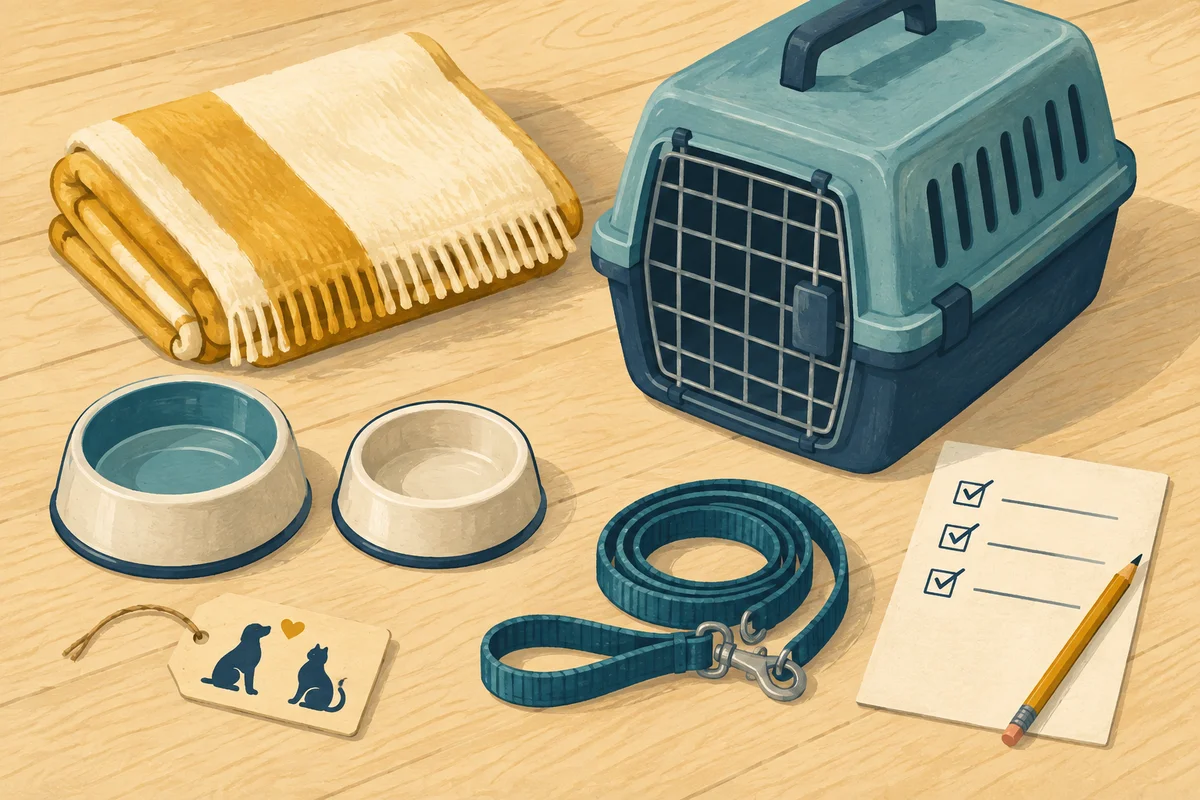
A new pet does not need a matching collection of accessories. They need equipment that works for their body, their daily care, and the journey home. A smaller, considered shopping list also leaves room to change your mind once you know them.
Start with the shelter or rescue's handover information. This guide helps you sort purchases into ready before arrival, check with the care team, and consider later. Any equipment required by your pet's individual care plan belongs on the ready list.
The short version
Key takeaways
- Confirm what the shelter supplies before buying duplicates.
- Arrange suitable transport before collection and check fit with the care team.
- Choose everyday equipment for access, condition, and ease of cleaning.
- Buy a small selection first; add optional extras when you can explain the need they will meet.
Get a handover list before you shop
Ask the adoption team for a specific list of anything going home with your pet. Record quantities as well as names: a small food sample and an ongoing supply are different things. Do not assume an adoption fee includes equipment.
Dogs Trust recommends starting with familiar food and asking the current caregiver what the dog eats. For a cat, ask about the litter they already use too. Write down exact details rather than trying to remember a bag's color.
- What food, litter, bedding, or equipment will come with this animal, and what must I bring?
- Which sizes or measurements should I use? Can someone check the fit before we leave?
- Which items are part of their current care plan, and who should I ask before changing them?
- Can I send a photo or description of equipment I already own before buying a replacement?
Further reading: Dogs Trust: Puppy checklist — preparing for your new dog (opens in a new tab); Cats Protection: Cats and toileting (opens in a new tab)
Prepare the journey home first
Transport is a before-collection decision. Ask the adoption team how your pet should travel and have them show you how to use the agreed equipment. Check that it fits your vehicle as well as the animal.
ASPCA advises securing a ventilated carrier or crate so it cannot slide or shift, with enough space for the animal to stand, turn, and lie down. Dogs traveling without a crate need an appropriate secured restraint; do not plan for a loose passenger. Check the equipment's vehicle-use instructions instead of assuming a walking harness serves both purposes.
A cat carrier should be secure and easy to clean. Try its catches while it is empty, and ask how to get your cat into it calmly. Pack water, a bowl, and suitable waste supplies for the trip. Never leave your pet alone in a parked vehicle.
Further reading: ASPCA: Travel safety tips (opens in a new tab); Cats Protection: Bringing a cat home (opens in a new tab)
For dogs, buy for daily use and individual fit
Use this as a short needs list, then confirm details with the adoption team. A crate is a separate choice to discuss around the dog's experience and your care plan; it does not automatically belong in every shopping basket.
| Need | What to check |
|---|---|
| Food and water | Have the agreed food and suitable bowls ready. |
| Rest | Choose washable bedding with room to stretch out. |
| Outings | Prepare a leash, collar and ID tag, plus any harness agreed with the team. Have waste bags ready. |
| Cleanup | Keep pet-appropriate cleaning supplies available and follow their use instructions. |
For dogs, buy for daily use and individual fit: at a glance
- Need
Food and water
- What to check
- Have the agreed food and suitable bowls ready.
- Need
Rest
- What to check
- Choose washable bedding with room to stretch out.
- Need
Outings
- What to check
- Prepare a leash, collar and ID tag, plus any harness agreed with the team. Have waste bags ready.
- Need
Cleanup
- What to check
- Keep pet-appropriate cleaning supplies available and follow their use instructions.
Further reading: Dogs Trust: Puppy checklist — preparing for your new dog (opens in a new tab)
Check the harness on the dog, not just the size chart
Dogs Trust emphasizes a secure fit that allows natural movement. Ask the care team to show you the adjustment points and check that the dog cannot slip out. The way a harness goes on matters too: a design that clips around the body may suit a dog who dislikes an opening passing over their head.
Keep the instructions for future adjustments, and inspect straps and fasteners for wear. If the dog is uncomfortable during fitting, pause and ask for help. Buying a second style at random is less useful than finding out what is causing the difficulty.
Further reading: Dogs Trust: How to train your dog to wear a harness (opens in a new tab)
For cats, make the essentials easy to use
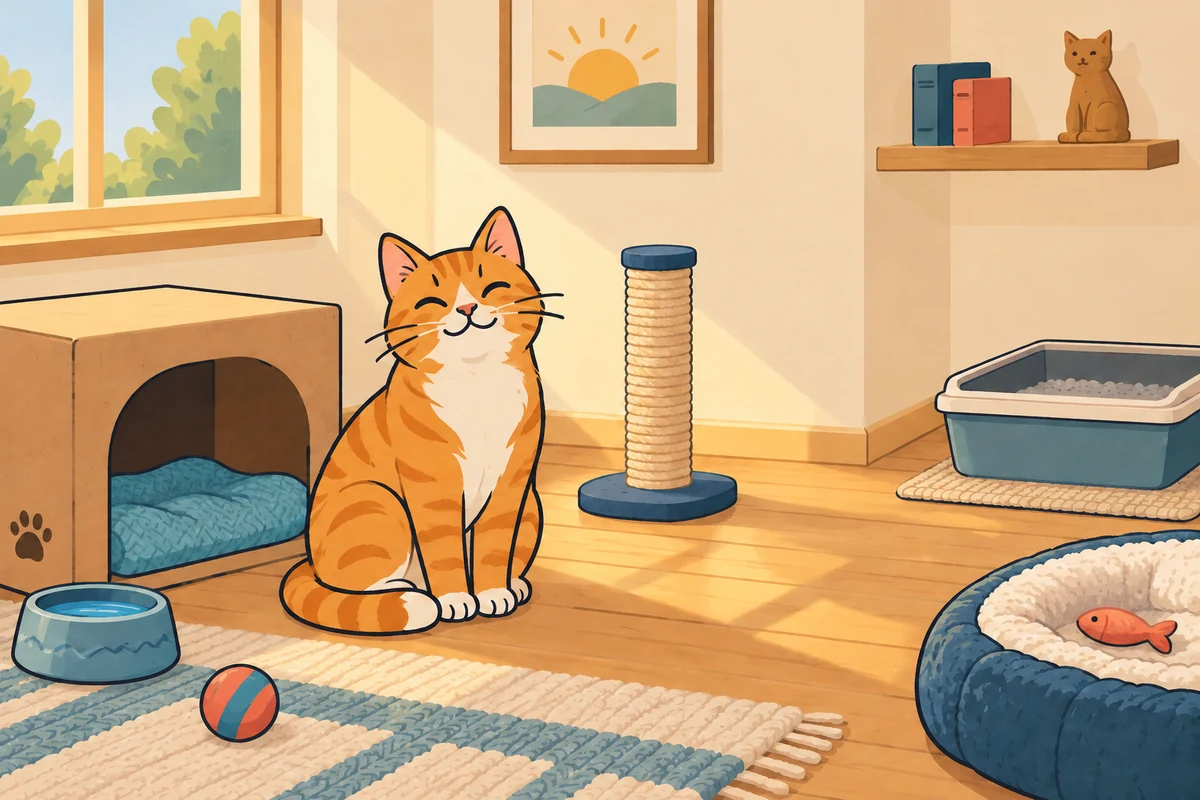
Alongside a carrier, have food and water bowls, the agreed food, a comfortable resting place, litter equipment, and a scratching surface ready. You can decide where they belong using our quiet-space guide; these checks help you choose the items themselves.
| Item | What to check |
|---|---|
| Litter trays | Allow room to turn around and an entrance the cat can manage. Low sides can help cats with mobility difficulties. Cats Protection recommends one tray per cat, plus one extra. |
| Litter | Ask what the cat knows already. Cats Protection advises avoiding scented litter. |
| Scratching surface | Choose a stable surface. A vertical post should allow a full stretch; some cats prefer horizontal scratching. Ask what this cat uses now. |
| Resting or hiding place | A suitable cardboard box can provide a simple hideaway; an elaborate new cat bed is not the only option. |
For cats, make the essentials easy to use: at a glance
- Item
Litter trays
- What to check
- Allow room to turn around and an entrance the cat can manage. Low sides can help cats with mobility difficulties. Cats Protection recommends one tray per cat, plus one extra.
- Item
Litter
- What to check
- Ask what the cat knows already. Cats Protection advises avoiding scented litter.
- Item
Scratching surface
- What to check
- Choose a stable surface. A vertical post should allow a full stretch; some cats prefer horizontal scratching. Ask what this cat uses now.
- Item
Resting or hiding place
- What to check
- A suitable cardboard box can provide a simple hideaway; an elaborate new cat bed is not the only option.
Further reading: Cats Protection: Bringing a cat home (opens in a new tab); Cats Protection: Cats and toileting (opens in a new tab); Cats Protection: Behaviour focus — scratching (opens in a new tab)
Start with a small, suitable toy selection
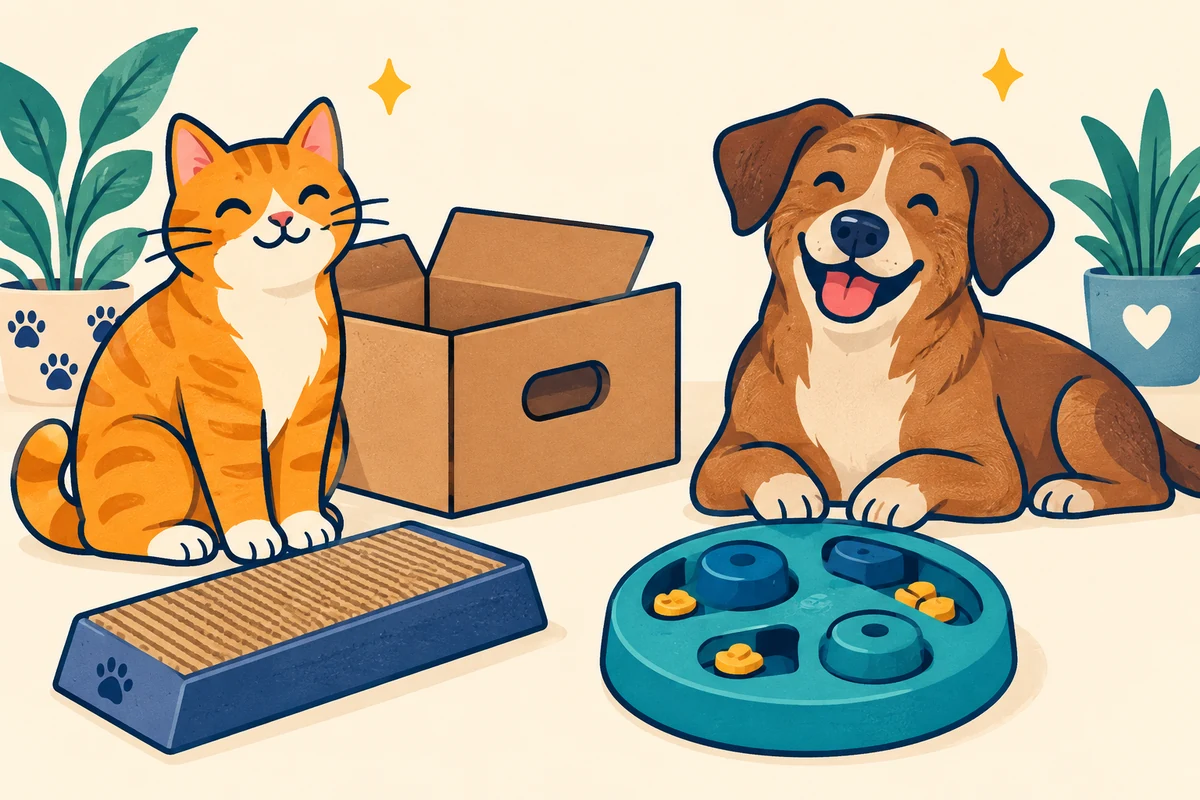
Ask what your pet enjoys, then choose a few suitable options rather than a large mixed bundle. AAHA highlights a dog's chewing style, toy size, hardness, and durability when selecting chew toys. Broken pieces and stuffing can be swallowed, and very hard chews can damage teeth. Ask your veterinarian about suitable chews for your individual dog.
For cats, Cats Protection recommends simple play options and rotating toys to maintain interest. Keep toys that could be shredded, swallowed, or cause entanglement for supervised use and put them away afterward. An inexpensive toy still needs the same suitability check as an expensive one.
Keep a short note of what works: for example, which toy the pet returns to and whether it is still intact afterward. That gives your next purchase a purpose.
Further reading: American Animal Hospital Association: Don't chew on this! (opens in a new tab); Cats Protection: Cats and play (opens in a new tab)
Check what you already own
Our suggested buying rule is to check an existing item against the same requirements as a new one. Its previous owner or original price cannot tell you whether it suits this animal. For unfamiliar or borrowed equipment, ask for the model and instructions before adding it to your ready list.
- Confirm the intended use and size. Measure the item, and check it against the current pet's needs.
- Inspect its condition. Set aside items with damaged fasteners, frayed straps, broken parts, or pieces coming loose.
- Check that it can be cleaned according to its instructions. Ask the care team if you are unsure about reusing a particular item.
- List only the missing essentials. Keep purchases that depend on fit or care advice separate until you have that answer.
Further reading: Dogs Trust: How to train your dog to wear a harness (opens in a new tab); American Animal Hospital Association: Don't chew on this! (opens in a new tab); Cats Protection: Bringing a cat home (opens in a new tab)
Give optional purchases a reason to earn their place
The examples below are our shopping priorities, not a rule that these products are always unnecessary. An item needed for an individual care plan should be ready before arrival. For everything else, write down the problem you want it to solve before choosing a product.
- Make three short lists: already available, essential before arrival, and decide later.
- Put unanswered fit or care questions beside the relevant item and contact the adoption team.
- Arrange the essentials before collection, then revisit optional purchases using what you learn about your pet.
| Consider later | A useful question first |
|---|---|
| A matching second set of accessories | Is the first set suitable and sufficient, or is there a specific need for a spare? |
| Large toy bundles or subscriptions | Which kinds of play does this pet enjoy, and what has proved suitable? |
| An elaborate bed or furniture upgrade | Does the pet use the resting option already available? Which feature would improve it? |
| An automatic feeder or other connected device | What task should it help with, does it fit the agreed routine, and can I maintain it? |
Give optional purchases a reason to earn their place: at a glance
- Consider later
A matching second set of accessories
- A useful question first
- Is the first set suitable and sufficient, or is there a specific need for a spare?
- Consider later
Large toy bundles or subscriptions
- A useful question first
- Which kinds of play does this pet enjoy, and what has proved suitable?
- Consider later
An elaborate bed or furniture upgrade
- A useful question first
- Does the pet use the resting option already available? Which feature would improve it?
- Consider later
An automatic feeder or other connected device
- A useful question first
- What task should it help with, does it fit the agreed routine, and can I maintain it?
A few more things to know
Frequently asked questions
Does an adoption fee include a starter kit?
Ask the individual organization. Confirm the items and quantities in advance rather than treating a fee as a promise of food or equipment. Use that list to avoid buying duplicates.
Can I reuse supplies from a previous pet?
Assess each item separately for fit, condition, intended use, and cleaning instructions. Reusing a suitable item can avoid an unnecessary purchase. Equipment that fitted a previous pet may not fit the new one; ask the care team when uncertain.
Should I choose new food before the adoption?
First ask exactly what your pet is eating and follow the handover plan. Dogs Trust recommends familiar food at the start and veterinary advice about changing a dog's diet. Bring questions about an individual diet to the care team before buying alternatives.
Is a toy labeled for the right size automatically suitable?
No. AAHA also identifies chewing style, hardness, and durability as considerations for dogs. For cats, consider whether a toy could be swallowed or become tangled. Choose for the individual animal and how the toy will be used, with supervision where needed.
What if the care team recommends something listed as optional?
Follow the individual care plan and clarify what needs to be ready before collection. Our wait list is a way to prioritize general shopping, not a reason to delay equipment your pet needs. Ask what feature matters so you can choose an appropriate option.
Sources & further reading
Explore the guidance behind this article.
- Dogs Trust: Puppy checklist — preparing for your new dog (opens in a new tab)
- Dogs Trust: How to train your dog to wear a harness (opens in a new tab)
- ASPCA: Travel safety tips (opens in a new tab)
- Cats Protection: Bringing a cat home (opens in a new tab)
- Cats Protection: Cats and toileting (opens in a new tab)
- Cats Protection: Behaviour focus — scratching (opens in a new tab)
- American Animal Hospital Association: Don't chew on this! (opens in a new tab)
- Cats Protection: Cats and play (opens in a new tab)
Thoughtful reads for people who want animals to feel safe, comfortable, and loved. These guides share general information; your veterinarian can advise on your animal’s individual health needs.